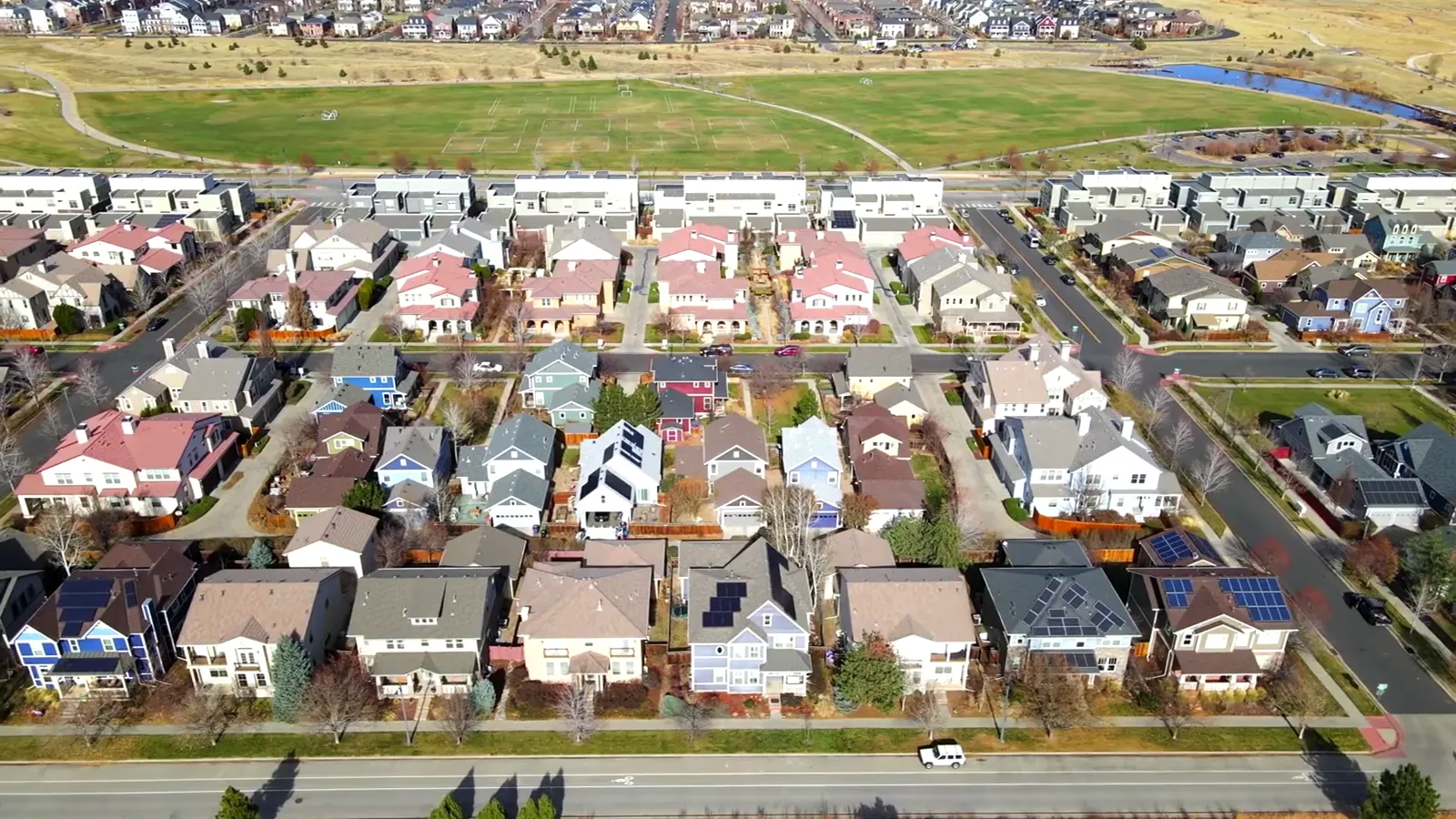
Your Complete Colorado Buyer's Guide
After years of guiding buyers through Colorado's ever-changing real estate market, I created this guide as the resource I wish every client had from day one. Whether you're buying your first home in Denver, a ski retreat in Breckenridge, an investment property in Colorado Springs, or exploring new construction on the Front Range — this guide covers every path to ownership with the depth and honesty you deserve. Bookmark it. Share it. Come back to it at every stage of your journey.
Before you start touring, get clear on the four things that matter most:
Getting clear on these four priorities gives Colorado buyers a decisive edge in today’s market. When you know what matters most before you tour, you can move faster, compare homes more confidently, and avoid wasting time on the wrong fit.
Search criteria
Define what you’re actually looking for: property type, size, must-haves vs. nice-to-haves, and location priorities. Getting specific here saves you from touring homes that don’t fit your life.
Budget and monthly payment
Know your true number before you fall in love with a home. Factor in down payment, closing costs, property taxes, HOA fees, and insurance — not just the purchase price.
Neighborhood tradeoffs
Every Colorado neighborhood has a personality. Commute time, school ratings, walkability, noise, and future development all affect your daily life and long-term value.
Offer strategy
In today’s market, how you offer matters as much as what you offer. Understanding contingencies, escalation clauses, and seller motivations can make or break a deal.
Assess Your Finances & Get Pre-Approved
Getting pre-approved is the single most important step before you begin your home search. It tells you exactly what you can afford, strengthens your offer, and shows sellers you're a serious buyer. Since August 2024, Colorado buyers must also sign a Buyer Agency Agreement before an agent can show them homes — a CREC-mandated change effective January 1, 2026.
Check Your Credit Score
Minimum 620 for conventional loans; 740+ for best rates. Pull your free report at AnnualCreditReport.com. Dispute errors 60–90 days before applying.
Calculate Your DTI
Lenders require a debt-to-income ratio of 43–45% maximum. Add all monthly debt payments ÷ gross monthly income. A great app Mortgage News Daily
Gather Your Documents
W-2s (2 years), tax returns, pay stubs (30 days), bank statements (2–3 months), and ID.
Get Pre-Approved (Not Pre-Qualified)
Pre-approval is a full underwrite. In Colorado's market, sellers expect it. Shop 2–3 lenders — rate differences of 0.5% can save $50K+ over the life of a loan.
Sign Your Buyer Agency Agreement
Required by CREC since Jan 1, 2026 (per NAR settlement). This agreement defines your agent's services and compensation before any showings.

Important: Pre-approval letters typically expire in 60–90 days. Time your application to align with your active search window. My favorite app for anything mortgage (See below): https://www.mortgagenewsdaily.com/
Loading...
Colorado Down Payment Assistance Programs
With mortgage rates in the 6–7% range, Colorado's robust assistance programs are more important than ever. The Colorado Housing and Finance Authority (CHFA) is the primary state agency — and these programs are available to more buyers than most people realize. https://www.chfainfo.com/
CHFA FirstStep
FHA Loan + DPA
30-year fixed FHA loan for buyers with lower credit scores or limited funds. Available to first-time buyers AND qualified veterans. Down payment assistance up to 3% of loan amount. Learn More
CHFA HomeOpener
Conventional + DPA
For buyers with stronger credit who still need down payment help. Conventional loan structure with CHFA assistance layered on top. Learn More
CHFA DPA Grant
Up to 3% Grant
A grant (not a loan) of up to 3% of your loan amount that never needs to be repaid. Income and purchase price limits apply by county. Learn More
Metro Mortgage Assistance Plus
Denver Metro Specific
Additional assistance for buyers purchasing in the Denver metro area. Check with your REALTOR® for current income limits and eligible zip codes. Learn More

First-time buyer? In Colorado, you qualify if you haven't owned a primary residence in the past 3 years — even if you've owned before. Source: CHFA.org
Always verify current program availability and limits at chfainfo.com or with a CHFA-approved lender.
The Home Search Process
According to NAR's 2025 Profile of Home Buyers & Sellers, the typical buyer searches for 10 weeks and views a median of 7 homes before purchasing. In Colorado's evolving market, a strategic search saves time and money. Here's how to search like a pro:
Define Your Non-Negotiables
Separate must-haves (bedrooms, school district, commute) from nice-to-haves (pool, finished basement). This prevents emotional decisions that lead to buyer's remorse.
Neighborhood Due Diligence
Research flood zones (FEMA maps), HOA rules and fees, school ratings (GreatSchools.org), walkability scores, and planned development in the area.
Set Up MLS Alerts
New listings in desirable Denver neighborhoods can go under contract in days. Real-time MLS alerts through your REALTOR® ensure you never miss a property.
Tour With Purpose
Bring a checklist. Note roof age, HVAC condition, water heater, windows, and foundation. These are the big-ticket items that drive inspection negotiations.
Understand Comparable Sales
Your REALTOR® will pull a Comparative Market Analysis (CMA) for any home you're serious about. This is your negotiating foundation.

In March 2026, days in MLS dropped to just 16 days for well-priced homes — meaning speed and preparation are essential. — DMAR March 2026 Market Trends Report
Making an Offer & Negotiating
Colorado uses the CREC-approved Contract to Buy and Sell Real Estate — a standardized form that protects both parties. Understanding its key components gives you real power at the negotiating table. In Q1 2026, the average close-price-to-list-price ratio was 97.94%, meaning buyers are successfully negotiating below asking price. — DMAR Jan 2026
01
Purchase Price & Earnest Money
Earnest money typically runs 1–3% of purchase price ($5,800–$17,400 on a $580K home). It goes toward your down payment at closing and is refundable for legitimate contract reasons.
02
Inspection Objection Deadline
Colorado gives buyers a strong due diligence period. You can inspect, object, and negotiate repairs — or terminate and get your earnest money back. Typical window: 10–14 days from MEC (Mutual Execution of Contract).
03
Appraisal Deadline
If the home appraises below purchase price, you can negotiate, cover the gap, or terminate. Know your appraisal gap strategy before you offer.
04
Loan Objection Deadline
Your financing contingency protection. If you can't secure financing, you can terminate without losing earnest money — within this window.
05
Closing Date
Typically 30–45 days from MEC. Colorado closings are handled by title companies (not attorneys), and possession is negotiated separately.

Negotiating Power: In today's market, asking for seller concessions toward closing costs or rate buydowns is increasingly common and accepted. Your REALTOR® can advise on what's reasonable by neighborhood.
Inspection, Appraisal & Closing
Once your offer is accepted, you'll enter the due diligence period — one of the most critical phases of the transaction. Colorado's CREC contract gives buyers strong protections during this time. Here's what to expect and how to protect yourself:
The Inspection
Hire a licensed Colorado inspector (check ASHI or InterNACHI credentials). Expect to pay $400–$700 for a standard inspection. Common Colorado-specific issues: radon (Colorado has some of the highest radon levels in the US), expansive soils/foundation movement, hail damage to roofs, and older sewer lines. Always add a sewer scope ($150–$200) and radon test.
The Appraisal
Required by your lender to confirm the home's value supports the loan amount. If it comes in low, you have three options: (1) Renegotiate the price, (2) Pay the appraisal gap out of pocket, or (3) Terminate and recover your earnest money within the appraisal deadline. In Q1 2026, with prices stabilizing, low appraisals are less common but still occur.
Closing Day
Colorado closings are handled by title companies. You'll sign documents, wire your down payment and closing costs (typically 2–5% of loan amount), and receive keys. Review your Closing Disclosure 3 business days before closing. Bring a valid government-issued ID.

Colorado Radon Alert: Colorado ranks in the top 5 states for radon exposure. The EPA action level is 4 pCi/L. Always test — mitigation systems typically cost $800–$1,500 and are highly effective. Source: Colorado Department of Public Health & Environment
Resale Homes — The Most Common Path to Colorado Ownership
The resale market — existing homes sold by individual owners — represents the majority of Colorado transactions and offers the widest selection of neighborhoods, price points, and property types. Here's how to navigate it strategically in 2026's balanced market.
Understand the Resale Advantage
Resale homes offer established neighborhoods, mature landscaping, known HOA track records, and often more square footage per dollar than new construction. In Q1 2026, 13,447 active listings in the Denver Metro give buyers real choices. — DMAR, 2026
Evaluate the Property's History
Request the Seller's Property Disclosure (SPD) early. Review permit history through the county assessor. Check for HOA violations, special assessments, and litigation history. Ask about insurance claims (CLUE report).
Understand Condo & Townhome Dynamics
Attached homes (condos/townhomes) face unique challenges in 2026: average days on market increased 26% to 68 days, and 5.1 months of supply keeps this segment firmly in buyer-favorable territory. High HOA dues and insurance costs are the primary headwinds. — CAR, Q1 2026
The Comparative Market Analysis (CMA)
Your REALTOR® will prepare a CMA comparing recent sales of similar homes within 0.5–1 mile. This is your pricing anchor. In today's market, homes are closing at 97.94% of list price on average — meaning there's room to negotiate. — DMAR Jan 2026
Craft a Competitive Offer
In a balanced market, you have tools: escalation clauses, flexible closing dates, seller concessions for closing costs or rate buydowns, and inspection contingencies. Your REALTOR® will advise on the right strategy for each specific property and neighborhood.

Market Insight: Single-family homes are outperforming attached properties in Q1 2026. Pending contracts on SF homes rose 7.6% YoY with months of supply tightening to 2.7 — meaning well-priced SF homes still move quickly. — CAR April 2026
Buying New Construction in Colorado — What Builders Won't Tell You
New construction is one of the most exciting — and misunderstood — paths to homeownership in Colorado. Builders are ramping up supply across the Front Range, but the process is fundamentally different from buying a resale home. The builder's sales agent represents the builder, not you. Here's what every buyer must know.
1
Bring Representation
Walking into a builder's sales office without your own REALTOR® is like going to court without a lawyer. The onsite rep's job is to maximize builder profits. Your agent costs you nothing — builders typically pay buyer agent commissions.
Builder contracts are drafted by the builder's attorney and heavily favor the builder. They are NOT the standard CREC form. Always have your own attorney review before signing.
2
Not CREC-Approved
Builder contracts are drafted by the builder's attorney and heavily favor the builder. They are NOT the standard CREC form. Always have your own attorney review before signing.
3
Negotiate Strategically
Builders often offer financing incentives (rate buydowns, closing cost credits) tied to using their preferred lender. Compare the total cost — sometimes the incentive is worth it, sometimes it's not.
4
Plan for Delays
New construction timelines routinely extend 3–6 months beyond initial estimates. Don't give notice on your rental until you have a firm closing date confirmed in writing.
5
Know What's Covered
Colorado builders must provide a statutory warranty: 1 year workmanship, 2 years mechanical systems, 6 years structural defects (C.R.S. § 13-80-104). Get all warranty terms in writing before closing.
Buying As-Is & Distressed Properties in Colorado
An 'as-is' listing in Colorado does NOT mean the seller can hide known defects. Under Colorado law (C.R.S. § 38-35.7) and CREC contract Section 10, sellers must disclose all adverse material facts actually known — regardless of how the property is listed. For buyers, as-is properties can represent significant value — if you know the rules.
What "As-Is" Actually Means
The seller will not make repairs or offer credits after inspection. You can still inspect, object, and terminate — and get your earnest money back within the Inspection Objection Deadline. The seller simply won't negotiate on condition. — CREC Contract Section 10, 2026
Seller Disclosure Still Required
Sellers must complete the 10-page Seller's Property Disclosure (SPD) detailing all known material defects. "Silence as fraud" is the most common cause of post-closing litigation in Colorado. — Colorado Lawyer, August 2025; ASAP Cash Offer, 2026
FHA/VA Appraisal Challenges
FHA and VA loans have strict property condition requirements. As-is homes with deferred maintenance often fail FHA/VA appraisals. Consider conventional financing or cash for distressed properties. Over 30% of standard as-is listings fail FHA/VA appraisal. — ASAP Cash Offer, Feb 2026
Your Due Diligence Strategy
For as-is purchases, budget for: full home inspection ($400–$700), sewer scope ($150–$200), radon test ($150), structural engineer if needed ($400–$800), and contractor bids for major repairs before your inspection deadline expires.

Legal Note: If a seller discovers a new defect AFTER submitting the SPD, Colorado law may give you the right to terminate — even after inspection deadlines have passed. — Frascona Law, March 2026
Buying a Second Home or Mountain Retreat in Colorado
Colorado's mountain communities — from Breckenridge and Vail to Steamboat Springs and Telluride — attract second-home buyers from across the country. But purchasing a vacation property comes with unique financial, legal, and lifestyle considerations that differ significantly from a primary residence purchase.
Financing Differences
Second homes require a minimum 10% down payment (vs. 3% primary). Rates are typically 0.5–0.75% higher than primary residence rates. Lenders will scrutinize your debt-to-income ratio across both properties. You must certify the property is for personal use — not primarily for rental income (that's an investment property classification).
Mountain Market Dynamics
Mountain markets operate on seasonal demand cycles. Inventory peaks in fall/winter; prices often peak in ski season. Boulder median: $894K (+3.2% YoY). Mountain resort towns command significant premiums with limited inventory. — IntelligentHomeBuying, 2026
HOA & Special Districts
Many mountain communities have HOAs with strict rental restrictions, short-term rental caps, or outright bans. Always review HOA documents (provided within the CREC contract timeline) before committing. Special taxing districts (metro districts) can add $100–$500/month to carrying costs.
Tax Implications
Second homes may qualify for mortgage interest deduction (up to $750K combined loan limit). Property taxes in Colorado are assessed at 6.95% of actual value for residential. Consult a CPA about the 14-day personal use rule if you plan to rent the property.
Property Management
If you won't be local, budget for professional property management (typically 20–30% of rental revenue for mountain markets). Vet managers carefully — they are your eyes and ears on the ground.

Case Study: A Breckenridge 3BR condo purchased in 2022 for $850K now generates $65,000–$85,000 annually in STR revenue — but requires a $1,200/bedroom annual STR license fee and compliance with Summit County's STR regulations. Net returns vary significantly by management quality and occupancy rates.
Investing in Colorado Real Estate — Long-Term Rentals & House Hacking
Colorado's combination of population growth, a diversified economy, and strong rental demand makes it one of the most compelling real estate investment markets in the country. Whether you're buying your first investment property or expanding a portfolio, understanding the rules and numbers is essential.
Investment Property Financing
Investment properties require a minimum 15–25% down payment. Rates run 0.5–1.5% higher than primary residence rates. Lenders use 75% of projected rental income to offset the mortgage payment in DTI calculations. Strong reserves (6 months PITI) are typically required.
House Hacking Strategy
Buy a 2–4 unit property as your primary residence (FHA allows 3.5% down on up to 4 units). Live in one unit, rent the others. The rental income offsets your mortgage — often dramatically. This is one of the most powerful wealth-building strategies available to Colorado buyers. FHA loan limits in Denver Metro: $833,750 for a single-family (2026).
The Colorado Rental Market
Denver's rental vacancy rate remains below 5%, supporting strong landlord fundamentals. Average 1BR rent in Denver: ~$1,650/month. Colorado Springs: ~$1,200/month. Fort Collins: ~$1,400/month. Long-term appreciation in Colorado has averaged 4–6% annually over the past decade.
Landlord-Tenant Law
Colorado is a landlord-friendly state with clear statutes. Key rules: Security deposits must be returned within 30 days (C.R.S. § 38-12-103). Eviction (unlawful detainer) process is well-defined. Colorado does NOT have statewide rent control. Always use a Colorado-specific lease reviewed by an attorney.

1% Rule Check: For a property to cash flow positively, monthly rent should ideally equal at least 1% of purchase price. At $575K median, that's $5,750/month — challenging in Denver proper. Colorado Springs and Pueblo offer better cash-flow fundamentals for investors.
Short-Term Rentals & Airbnb in Colorado — A Regulatory Guide
Colorado has no statewide STR law. Every municipality sets its own rules — and the gap between the most permissive and most restrictive markets is enormous. Before you buy a property with STR income in mind, your due diligence must start with one question: what does this specific city or county allow?
Denver
Primary Residence Only
Denver restricts STRs to primary residences only — effectively eliminating the traditional investor model of buying solely to rent short-term. ~3,800 active Airbnb listings; 80% hold valid STR licenses. Max fine for false primary residence claim: $500,000. — ElevateSTR, 2026
Breckenridge
Licensed & Capped
Requires STR license with per-bedroom regulatory fees of $756/bedroom annually. Summit County has additional regulations. Larger properties face significantly higher operating costs. Strong demand supports premium nightly rates.
Vail
Premium Market
$1,200/bedroom annual STR license fee. Strict compliance enforcement. High barriers to entry — but also the highest nightly rates in Colorado. Occupancy rates for compliant operators remain strong.
Aspen
Waitlist System
Uses a zone-based cap and waitlist system for non-owner-occupied STR permits (Ordinance No. 9, Series 2022). If you're not already permitted, expect to wait — potentially years. Permits are non-transferable on sale.
Colorado Springs
Dual-Track Licensing
Owner-occupied and non-owner-occupied properties face different licensing tracks and zoning restrictions. Requires a designated 24-hour local contact person. Combined sales and lodging tax applies to all rental income. — Hoste, 2026
Steamboat, Durango, Estes Park
Lighter Regulation
More permissive frameworks, but all require permits or licenses. Steamboat's enforcement has recently drawn controversy for aggressive fines. Always verify current rules before purchasing.

Tax Compliance: Colorado STRs owe state sales tax + local lodging tax at multiple levels. Platforms like Airbnb collect some but not all taxes. You are responsible for registering and remitting what the platform doesn't collect. Consult a CPA specializing in STR taxation.
Frequently Asked Questions
Colorado Buyer's FAQ — Straight Answers to Your Most Important Questions
Buying a home in Colorado comes with a lot of questions. Below are honest, compliant answers to the questions buyers ask most — covering contracts, costs, representation, and everything in between. All information reflects current CREC rules, NAR guidelines, and Colorado MLS standards.
Representation & Agency
Do I need to sign a Buyer Agency Agreement before touring homes?
Yes. As of August 17, 2024, per the NAR settlement and CREC rules, all buyers must sign a written Buyer Agency Agreement (CREC Exclusive Right-to-Buy Listing Contract) before an agent can show you properties or represent you. This agreement outlines the services your agent will provide and how they will be compensated. It is negotiable — including duration, geographic scope, and compensation amount.
What does a Buyer's Agent actually do for me?
As your exclusive representative, your Buyer's Agent has a fiduciary duty to you — including loyalty, confidentiality, disclosure, obedience, reasonable care, and accounting. They help you search, evaluate, negotiate, and navigate every step of the transaction. Under Colorado law, your agent must always act in your best interest.
Can the same agent represent both the buyer and seller?
No. Colorado does not allow traditional dual agency. However, a broker may act as a Transaction Broker — a neutral facilitator who assists both parties without representing either exclusively. This must be disclosed and agreed to in writing. You have the right to request exclusive representation.
What is a Transaction Broker vs. a Buyer's Agent?
A Buyer's Agent (Exclusive Right-to-Buy) represents only you and owes you full fiduciary duties. A Transaction Broker assists both parties neutrally and owes limited duties — primarily honesty, accounting, and reasonable skill. Jackson Granger represents buyers exclusively as their Buyer's Agent.
Compensation & Costs
How does my agent get paid?
Since August 2024, buyer agent compensation is negotiated directly between you and your agent — it is no longer set or advertised through the MLS. The amount must be clearly defined in your Buyer Agency Agreement (e.g., a flat fee, percentage, or hourly rate). Sellers may still offer concessions that can be used toward buyer agent compensation, but this must be negotiated separately in the purchase contract.
What are typical closing costs for buyers in Colorado?
Buyers in Colorado typically pay 2%–3% of the purchase price in closing costs. On a $540,000 home (near the current statewide median), that's approximately $10,800–$16,200. Key items include: title insurance, lender origination fees, appraisal ($450–$750), home inspection ($350–$650), prepaid property taxes, and homeowner's insurance. Colorado does not require an attorney at closing — title companies handle most transactions.
What is earnest money and can I get it back?
Earnest money is a good-faith deposit — typically 1%–3% of the purchase price — delivered within 2–3 days of contract acceptance and held in escrow. If you terminate within a valid contract contingency (inspection, financing, appraisal, title), you are generally entitled to a full refund. If you terminate without a valid contractual reason, the seller may be entitled to keep it. Your agent will help you protect this deposit at every deadline.
Can the seller pay my closing costs?
Yes. You can negotiate seller concessions in your offer — a dollar amount or percentage the seller agrees to contribute toward your closing costs. This is separate from agent compensation and must be explicitly written into the CREC Contract to Buy and Sell. Seller concessions are common in slower markets or with motivated sellers.
Let's Get Started
Buying a home is one of the most significant financial decisions of your life. Having an experienced, knowledgeable REALTOR® in your corner makes all the difference — from your first search to the moment you get your keys.
Local Market Expertise
Deep knowledge of Colorado's neighborhoods, pricing trends, and market conditions — so you can make informed decisions with confidence.
Your Advocate, Always
As your Buyer's Agent, Jackson represents your interests exclusively — negotiating on your behalf and protecting you throughout the transaction.
Data-Driven Strategy
Every recommendation is backed by current market data from NAR, CAR, and local MLS — not guesswork.
Responsive & Accessible
Real estate moves fast. Jackson is committed to being available, responsive, and proactive at every step of your journey.

"The most difficult step for first-time buyers is simply finding the right property." — NAR, 2025 Profile of Home Buyers & Sellers. Let Jackson help you find yours.
Jackson Granger, REALTOR®


The property information herein is derived from various sources that may include, but not be limited to, county records and the Multiple Listing Service, and it may include approximations. Although the information is believed to be accurate, it is not warranted and you should not rely upon it without personal verification. Affiliated real estate agents are independent contractor sales associates, not employees. ©2026 Coldwell Banker. All Rights Reserved. Coldwell Banker and the Coldwell Banker logo are trademarks of Coldwell Banker Real Estate LLC. The Coldwell Banker® System is comprised of company owned offices which are owned by a subsidiary of Anywhere Advisors LLC and franchised offices which are independently owned and operated. The Coldwell Banker System fully supports the principles of the Fair Housing Act and the Equal Opportunity Act.
The content relating to real estate for sale in this Web site comes in part from the Internet Data eXchange (“IDX”) program of METROLIST, INC., DBA RECOLORADO® Real estate listings held by brokers other than Coldwell Banker Realty are marked with the IDX Logo. This information is being provided for the consumers’ personal, non-commercial use and may not be used for any other purpose. All information subject to change and should be independently verified.
Jackson Granger | Licensed Colorado Real Estate Broker | CREC · NAR · CAR · DMAR Member | dre.colorado.gov